



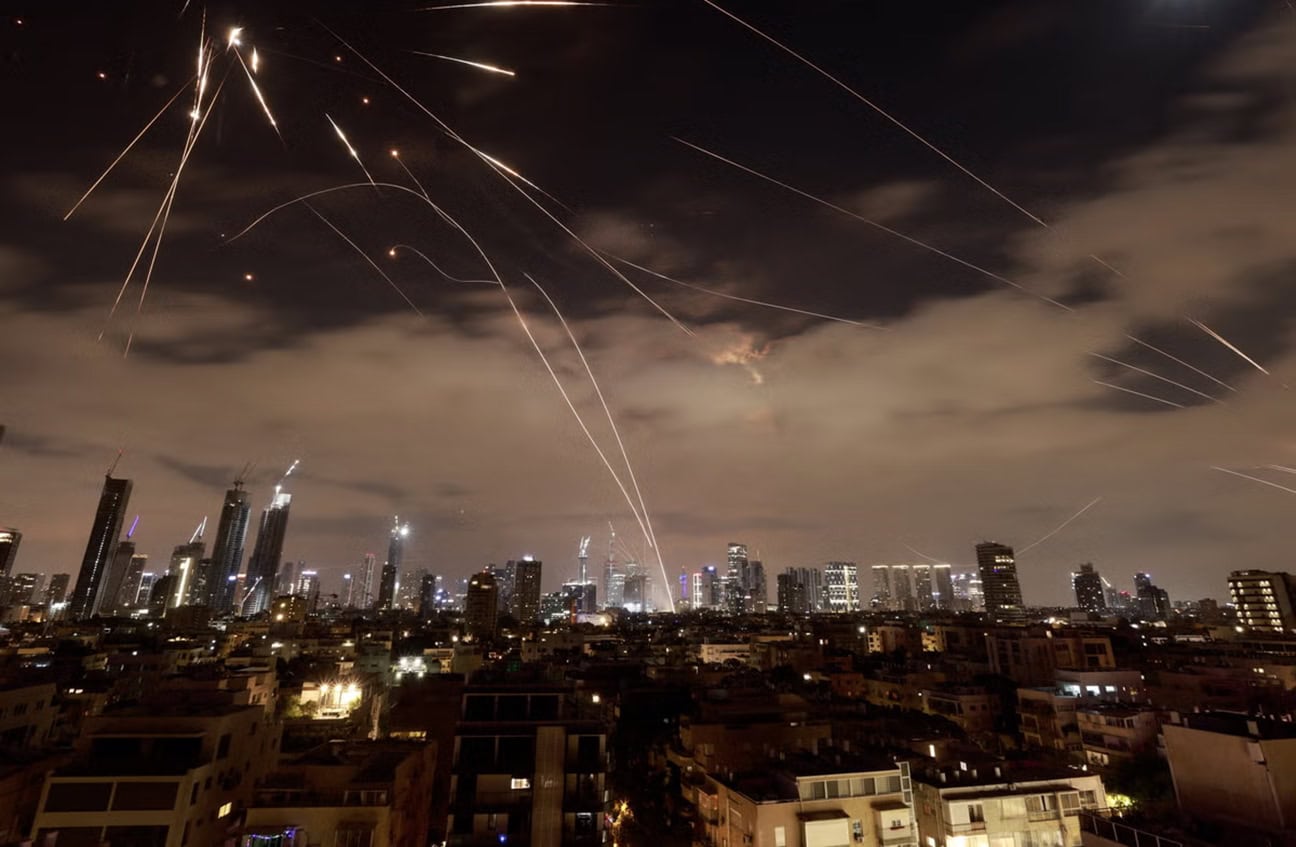
Israel and Iran exchanged more deadly attacks in the early hours of Monday, as the conflict between the two countries entered its fourth day, raising concerns that the region is heading toward a broader conflict in the Middle East.
The Israeli army said it “precisely struck” command centers belonging to Iran’s Quds Force — an elite military and intelligence arm of the Islamic Revolutionary Guard Corps (IRGC) — overnight, killing four officers, including the head of the IRGC’s Intelligence Organization.
If confirmed, the operation would be the latest blow in a series of attacks on Iran’s military capabilities since Israel launched its surprise attack last week, targeting the country’s nuclear capabilities. Israel considers the Iranian nuclear program a direct threat to its national security.
Israeli army spokesman Brigadier General Effie Defrin said the Air Force had achieved “total air superiority” over the skies of Tehran on Monday. He added that the army had destroyed one-third of Iran’s missile launchers.
Iran’s Health Ministry says more than 200 people have been killed since the start of the Israeli offensive, including many women and children, and more than 1,000 people have been injured.
At least 24 people were killed by Iran’s retaliatory attacks against Israel, and nearly 600 were injured.
The latest attacks hit Israel in the early hours of Monday, when Iranian missiles and drones struck Tel Aviv and Haifa, killing at least eight people and injuring nearly 100 others, according to the Israeli prime minister’s office.
In Petah Tikvah, near Tel Aviv, four people were killed after an Iranian missile hit a residential building. The victims included two men and two women, all in their 70s. Israel’s emergency services, Magen David Adom, shared images of babies being rescued from the rubble.
A missile hit the US consulate in Tel Aviv, causing minor damage to its facade, said US Ambassador to Israel Mike Huckabee in a post on X, adding that the consulate would remain closed on Monday. No American staff were reported injured in the attack. Despite ongoing international calls for de-escalation, neither side has shown signs of willingness to enter negotiations.
“The problem is not de-escalation,” Israeli Prime Minister Benjamin Netanyahu told Fox News host Brett Baier in an interview late Sunday. “The problem here is not a ceasefire, the problem here is stopping those things that threaten our survival and we are committed to stopping them, and I think we can achieve that.”
On Monday, Iran’s Revolutionary Guards warned that more rounds of attacks against Israel would be “more powerful, severe, precise, and destructive than the previous ones”.
In a post on his Truth Social site on Sunday, President Trump renewed calls for Iran and Israel to make a deal, but later told reporters that “sometimes they just have to settle it in the fight”.
On Monday, the president confirmed to reporters that Iran had sent messages through intermediaries indicating it wants to de-escalate the conflict with Israel.
“They want to talk, but they should have done that before,” Trump told reporters after a meeting with Canadian Prime Minister Mark Carney at the G7 summit in Canada. “They have to make a deal. And it’s painful for both sides, but I’d say Iran is not winning this war, and they should talk and they should talk immediately before it’s too late.”
Source: www.npr.org by Rebecca Rosman