



Senior US and Chinese negotiators reached an agreement on a framework to get trade talks back on track after a series of disputes that threatened to derail them, Chinese state media reported on Wednesday.
The announcement came after two days of talks in the British capital that ended on Tuesday night.
The meetings appeared to focus on finding a way to resolve disputes over mineral and technology exports that shook a fragile trade truce reached in Geneva last month. It is unclear whether there was progress on the more fundamental differences over China’s substantial trade surplus with the United States.
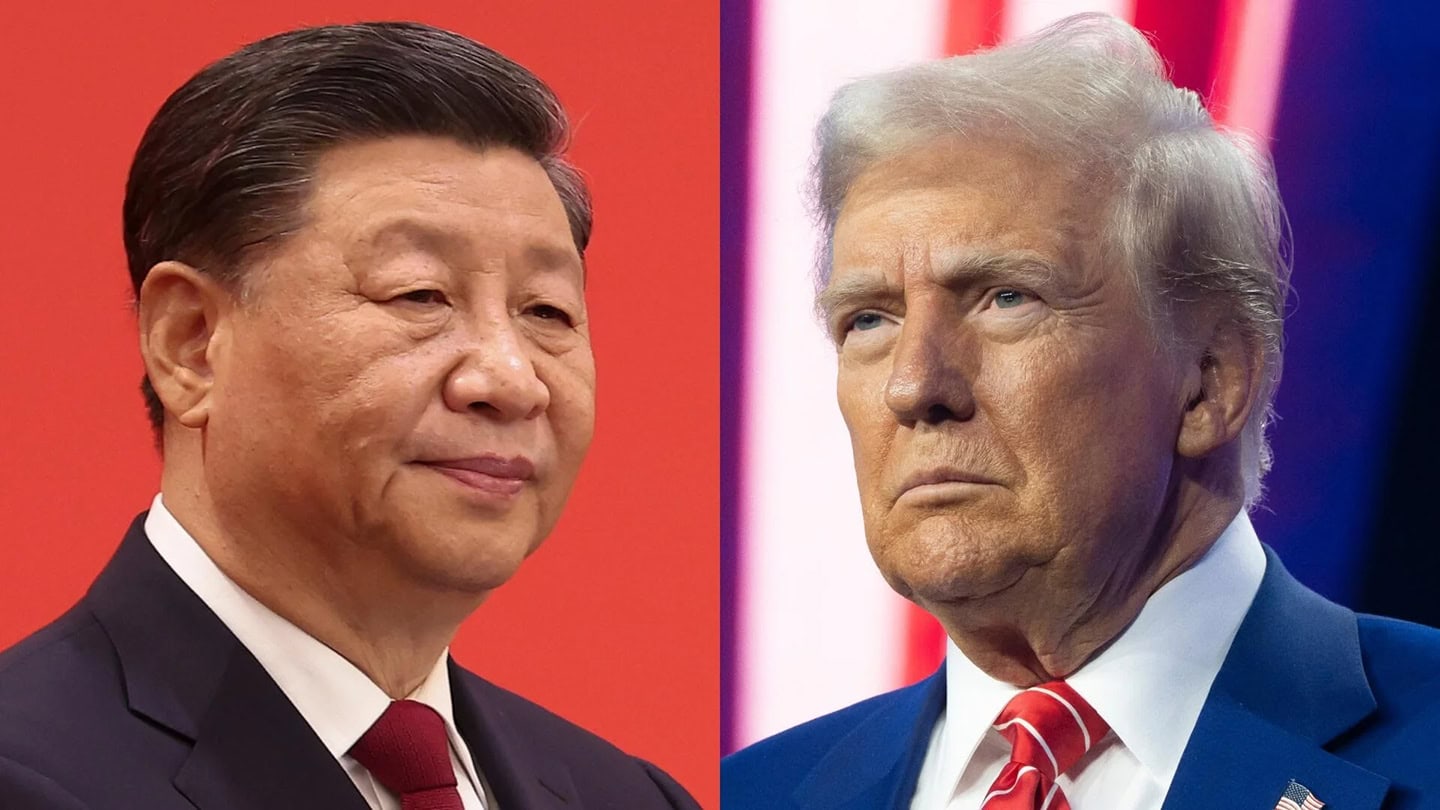
President Donald Trump spoke by phone with Chinese leader Xi Jinping last week to try to calm tensions.
Li Chenggang, China’s Vice Minister of Commerce and international trade representative, said the two sides agreed in principle on a framework to implement the consensus reached between the two leaders and in the Geneva negotiations, according to the official Xinhua agency.
Additional details, including any plans for a next round of negotiations, were not immediately disclosed.
Li and Wang Wentao, China’s Minister of Commerce, were part of the delegation led by Vice Premier He Lifeng. They met with US Commerce Secretary Howard Lutnick, Treasury Secretary Scott Bessent, and Trade Representative Jamieson Greer at Lancaster House, a 200-year-old historic mansion near Buckingham Palace.
Wendy Cutler, former US trade negotiator, said the disputes wasted 30 of the 90 days the two sides have to try to resolve their differences.
They agreed in Geneva to a 90-day suspension of most tariffs above 100% that they had imposed on each other in an escalating trade war that raised fears of recession. The World Bank, citing rising trade barriers, downgraded on Tuesday its projections for US and global economic growth this year.
“The US and China wasted valuable time to restore their Geneva agreements,” Cutler said, now vice president of the Asia Society Policy Institute. “Now, only 60 days remain to address troubling issues, including unfair trade practices, overcapacity, transshipment, and fentanyl.”
Since the Geneva negotiations, the US and China have exchanged harsh words over advanced semiconductors that power artificial intelligence, visas for Chinese students at US universities, and rare earth minerals essential for automakers and other industries.
China, the world’s largest producer of rare earths, indicated it may ease export restrictions imposed on the elements in April. The restrictions alarmed automakers worldwide that depend on them. Beijing, in turn, wants the US to lift restrictions on Chinese access to technology used to produce advanced semiconductors.
Cutler said it would be unprecedented for the US to negotiate over its export controls, which she described as a point of irritation that China has mentioned for nearly 20 years.
“By doing so, the US has opened a door for China to insist on including export controls in future negotiation agendas,” she said.
In Washington, a federal appeals court on Tuesday allowed the government to continue collecting tariffs imposed by Trump not only on China but also on other countries worldwide, while the administration appeals a decision against its main trade policy.
Trump previously said he wants to “open China,” the world’s main manufacturer, to American products.
“If we don’t open China, maybe we won’t do anything,” Trump said at the White House. “But we want to open China.”
Fonte: www.npr.org