



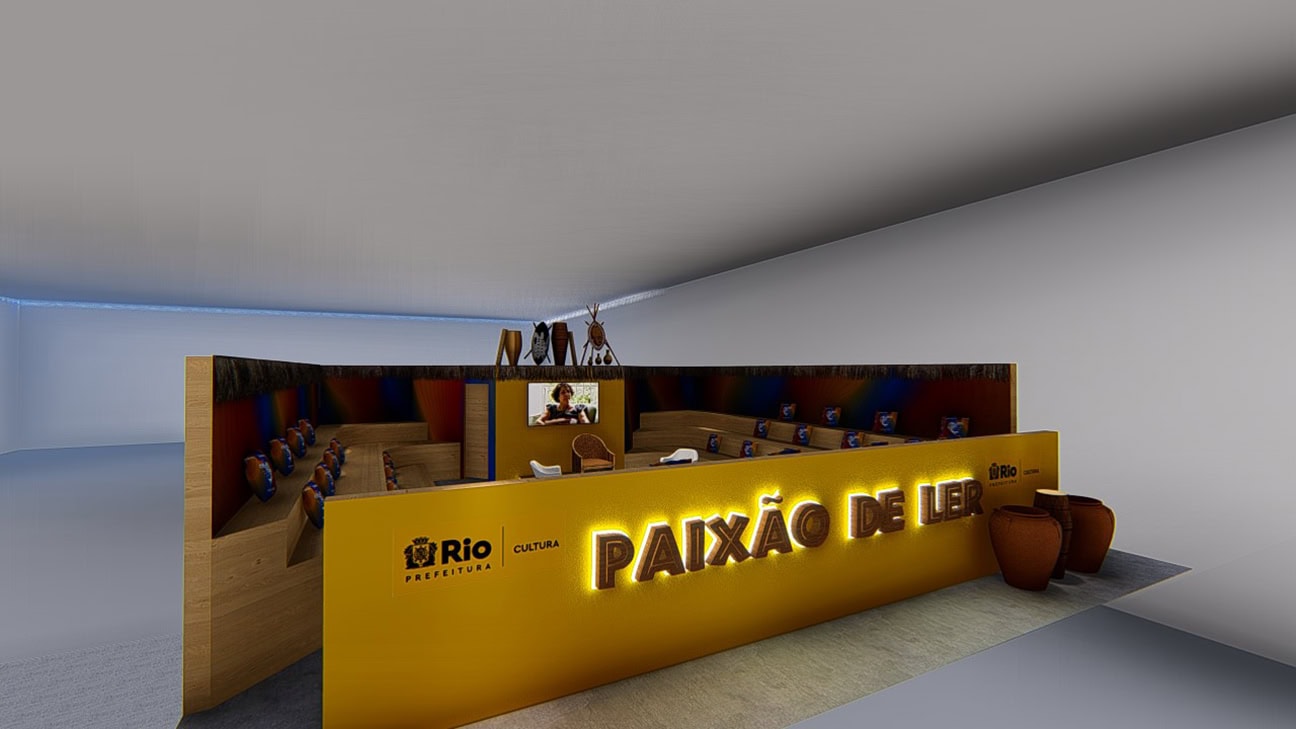
In April, the Marvelous City celebrated the official opening of Rio de Janeiro as World Book Capital, a title granted to the city by the United Nations Educational, Scientific and Cultural Organization (UNESCO). The most recent cities selected by UNESCO were Sharjah (2019), Kuala Lumpur (2020), Tbilisi (2021), Guadalajara (2022), Accra (2023) and Strasbourg (2024).
For one year, Rio will have a schedule of events and actions aimed at developing new public reading policies. The city hall highlighted the Book Biennial, from June 13 to 22, and a special edition of the Jabuti Prize, which will be held for the first time in Rio de Janeiro.
The program also includes activities in municipal libraries, exhibitions in museums, literary cafés, poetry gatherings, literary fairs and cultural interventions in the city’s main public transport terminals.
Few Readers
The title granted to Rio de Janeiro is an opportunity to rethink reading programs and access to books across the country. The 6th edition of the ‘Retratos da Leitura no Brasil’ survey, released in 2024, shows that there was a reduction of 6.7 million readers in the country.
The survey, conducted by the Pró-Livro Institute, also indicated that the proportion of non-readers exceeded that of readers for the first time in the historical series.
In the three months prior to the survey, 53% of people did not read even part of a book, whether print or digital, of any genre, including textbooks and religious books. Considering only books read in full in the same period, the percentage was 27%.
The survey was conducted in 208 cities. The majority of readers are female (50.4%), with the 11 to 13 age group being the one that reads the most (81%). The South Region had the highest proportion of readers (53%). Followed by the North (48%), Midwest (47%), Southeast (46%) and Northeast (43%) regions.
Another aspect to consider is the price of books and the purchasing power of Brazilian consumers. The 9th Brazilian Book Retail Panel, produced by the National Syndicate of Book Publishers (SNEL), showed that the average price of a book in the country rose 12.20%, reaching R$51.48.
Another survey, from the Brazilian Book Chamber (CBL), reinforces the SNEL data. In the most recent survey, only 16% of the Brazilian population over 18 years old said they had bought at least one book in the last 12 months.
Source: Agência Brasil