



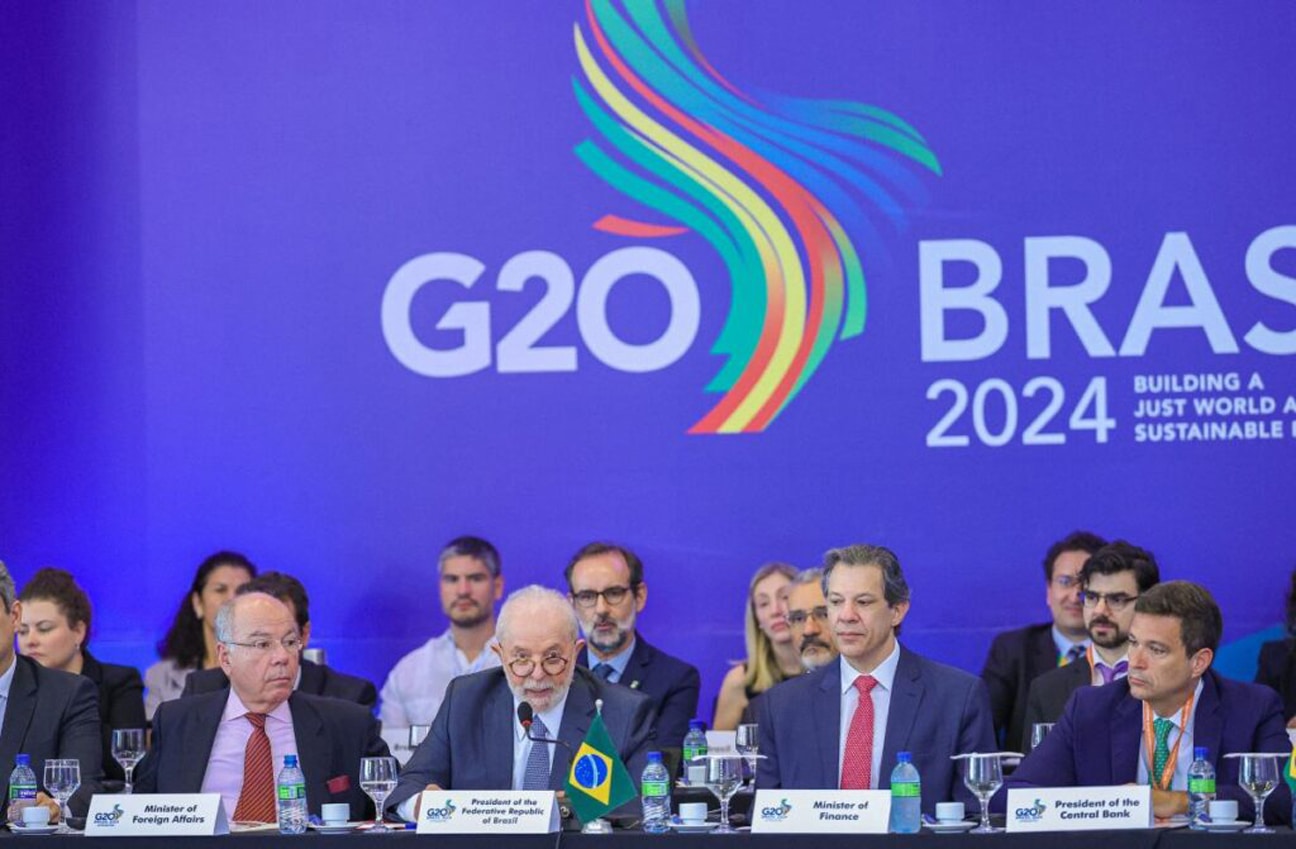
Israel and Palestine, Russia and Ukraine, armed conflicts in Somalia, Sudan, Nigeria, and Syria. Different parts of the world are witnessing an increase in political instability, military spending, and the number of victims. During the G20 Foreign Ministers’ Meeting in Rio de Janeiro last February, Brazil’s priority was to discuss ways to reform and strengthen the United Nations (UN).
Maurício Carvalho Lyrio, Brazil’s G20 sherpa and Secretary of Economic and Financial Affairs at the Ministry of Foreign Affairs, emphasized the urgent need to restructure global governance and ensure the availability of peacebuilding mechanisms.
“We are putting out fires. With 183 conflicts ongoing worldwide, the humanitarian situation has reached a catastrophic level, requiring structural action,” stated the ambassador. “Our goal is to achieve a significant reform of the UN, transforming it into an effective instrument for conflict prevention.”
“Some countries advocate for reforming the Security Council, while others propose strengthening the General Assembly or the Economic and Social Council. Brazil has consistently supported comprehensive reform. The UN must become more representative and responsive to contemporary needs,” he added.
G20 Meetings
Brazil assumed the rotating presidency of the G20 on December 1, 2023, and will continue in this role until November 30, 2024. Throughout this period, around 130 meetings are scheduled to be held in 15 cities across the country. Among these events, the most significant will be the G20 Leaders’ Summit, set for November 18 and 19 in Rio de Janeiro.
The February meetings were attended by representatives from all G20 member countries, including Argentina, Australia, Canada, China, France, Germany, India, Indonesia, Italy, Japan, Mexico, Russia, Saudi Arabia, South Africa, South Korea, the United Kingdom, and the United States. Additionally, representatives from the African Union and the European Union were also present.
According to the Brazilian Ministry of Foreign Affairs, discussions throughout the year will be structured around three priorities: strengthening social inclusion and combating hunger and poverty; promoting sustainable development, focusing on its three pillars: social, economic, and environmental aspects; and reforming global governance institutions.
Source: Agência Brasil