



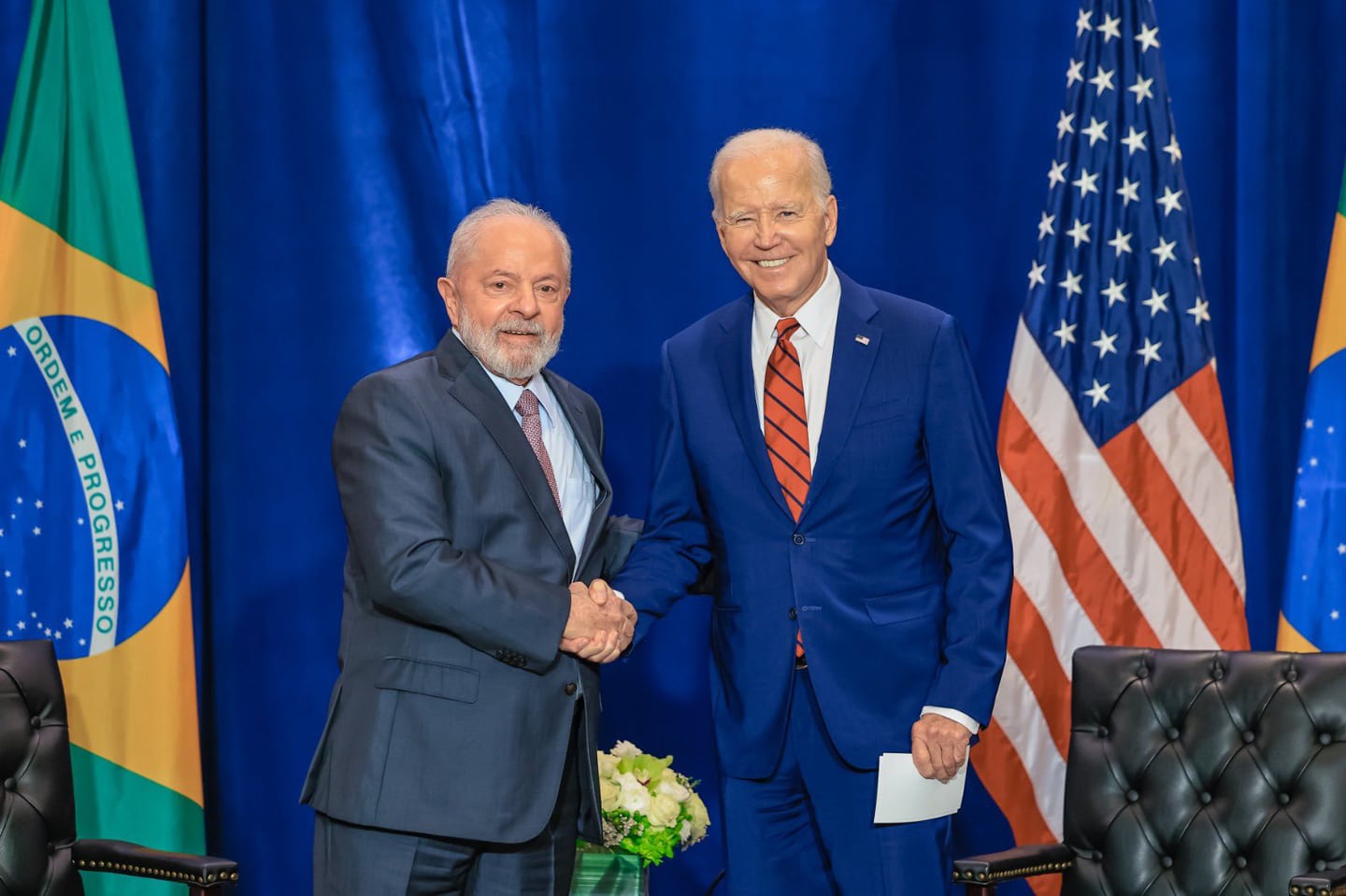
Brazil and the United States are the largest democracies in the Americas. Both nations have dynamic and diversified economies and share common values and interests. Their populations are ethnically and culturally diverse. The bilateral relationship is comprehensive and institutionalized, based on a solid history of partnership. In 2024, the two countries will celebrate the 200th anniversary of diplomatic relations between them.
The United States is the main destination for Brazilian exports of manufactured goods and the primary source of foreign direct investment in Brazil. Several American companies have been present in the Brazilian market for over a century. At the same time, Brazilian corporations are also expanding their investments in the United States, in an effort to increase their production scale, acquire new technologies, and expand their activities worldwide. The ties between peoples have also gained importance through the increase in business travel, student exchanges, and cultural activities. The United States is home to the largest contingent of Brazilian expatriates, estimated at 1.9 million people.
Brazil and the United States collaborate on issues such as the defense of democracy, the fight against climate change, the promotion of human rights, the integration of value chains, trade facilitation, science, technology and innovation, and strengthening cooperation in the fields of energy transition, space, education, and culture.
At the invitation of President Biden, President Lula visited Washington, DC, on February 10, 2023. On that occasion, both leaders highlighted that strengthening democracy, promoting respect for human rights, and combating climate change are at the center of the bilateral agenda. They also decided to resume the activities of the U.S.-Brazil High-Level Working Group on Climate Change and revitalize the Joint Action Plan to Eliminate Racial and Ethnic Discrimination.
The constructive dialogue between Brazil and the United States benefits from the existence of various cooperation mechanisms. Among the main forums for bilateral coordination are:
• U.S.-Brazil Climate Change Working Group;
• Joint Action to Eliminate Racial and Ethnic Discrimination (JAPER);
• U.S.-Brazil Energy Forum (USBEF);
• U.S.-Brazil Clean Energy Industry Dialogue;
• U.S.-Brazil Commercial Dialogue;
• U.S.-Brazil Commission on Economic and Trade Relations;
• Consultative Committee on Agriculture;
• U.S.-Brazil CEO Forum.
In terms of trade, the United States is Brazil’s second-largest trading partner and the main destination for Brazilian manufactured and semi-manufactured products. In 2022, bilateral trade flows reached a historic record of $88.7 billion, representing a 25.8% increase compared to 2021. This is the first time that bilateral trade surpassed the $80 billion mark. Of the total, $37.4 billion corresponded to Brazilian exports (an increase of 20.2% compared to 2021) and $51.3 billion to American exports (an increase of 30.3% in the same comparison).
According to data from the Central Bank of Brazil, the stock of American direct investment in Brazil in 2019 totaled $191 billion, an increase of $68 billion or 55.3% compared to the previous year. This amount represents 21.3% of the total foreign direct investment in Brazil, making the United States the main source of foreign investments in the country, with a stock about four times larger than that of the next largest source. According to data from SelectUSA, the agency responsible for promoting and facilitating business investments in the United States, the stock of Brazilian investments in the U.S. reached $45.4 billion in 2021. The frequent and intense exchange of high-level visits between Brazilian and American leaders, as well as the extensive formal dialogue mechanisms established between representatives of the public and private sectors of both countries, highlight the broad, dynamic, and productive nature of the Brazil-U.S. partnership.
A Brief History
§ The United States played a significant role in recognizing Brazil’s independence and establishing diplomatic relations, highlighting the historical ties between the two countries.
§ Brazilian foreign policy aimed to strengthen ties with the United States, making it our main trading partner.
§ Collaboration between Brazil and the U.S. during World War II, including support for infrastructure modernization and military re-equipment, demonstrates the importance of strategic alliances in times of war.
§ President Roosevelt advocated for Brazil’s inclusion as a permanent member of the UN Security Council, highlighting the initial alliance between Brazil and the United States.
§ Brazil signed a military assistance agreement with the United States, providing strategic minerals in exchange for training and equipping its Armed Forces.
§ The Pan-American Operation proposed by the JK government aimed to prevent the spread of communism in Latin America and required official U.S. investment for the development of Brazil and the region.
§ The extension of Brazil’s territorial sea to 200 nautical miles in 1970 provoked protests from the Nixon administration.
§ The United States is Brazil’s second-largest trading partner and the main source of foreign investment in the country.
Source: GOV.BR