



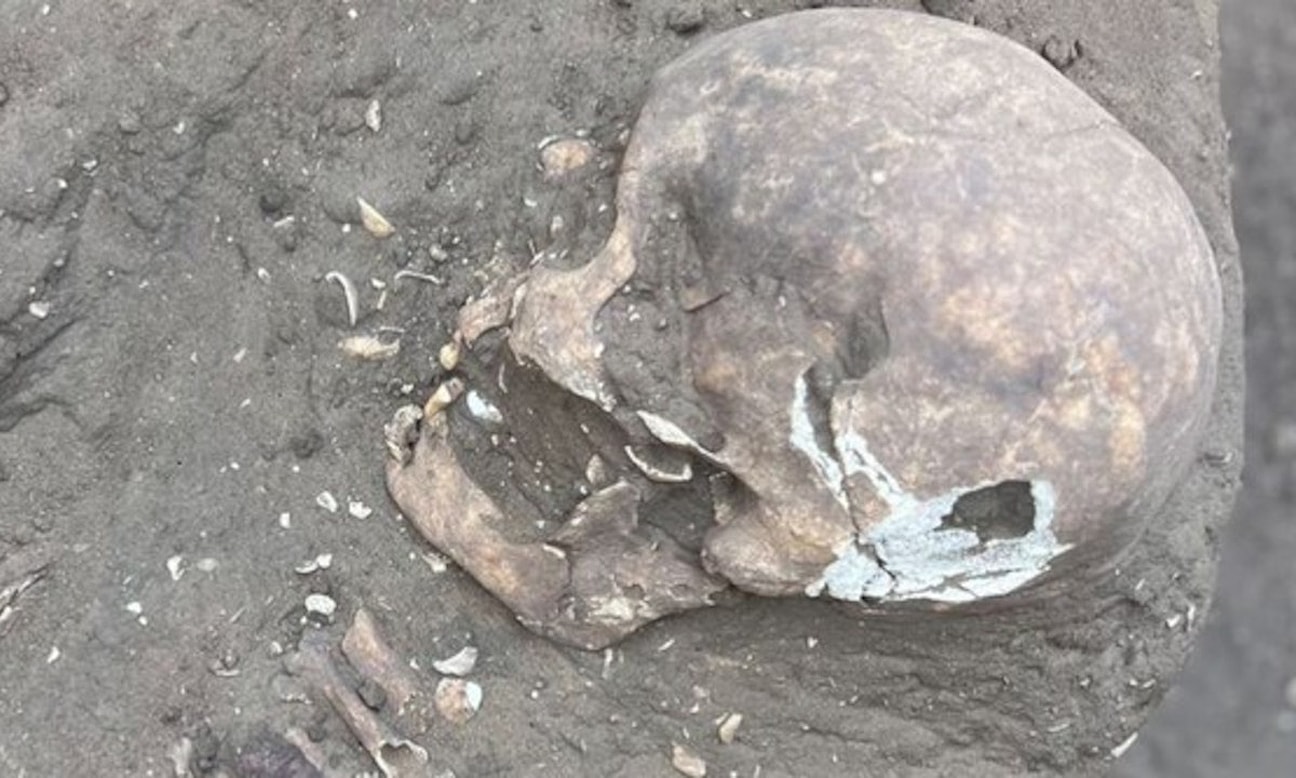
Forty-three human skeletons were found during excavations for a project in the State of Maranhão, Brazil, where the construction company MRV is building residential condominiums under the federal housing program Minha Casa Minha Vida.
In addition to the skeletons, the research and archaeological excavation work, conducted by the company W Lage Arqueologia and coordinated by archaeologist Wellington Lage, uncovered a large number of historically valuable pieces: there are about 100,000 fragments, including ceramics, lithic materials (for tool making, stone), charcoal, bones, and decorated shells.
Laboratory analyses are still ongoing to precisely determine the age of these materials and skeletons, but the number of burials and the quantity of pieces found suggest an archaeological site that may have unique value for the study of Brazil’s past.
Several skeletons were located under a ‘sambaqui’ (a type of mound made of shells and sediments built along riverbanks and coasts by populations that inhabited Brazil thousands of years ago) and may belong, as preliminary analyses indicate, to strong men and women of short stature who were carefully buried there.
In one of the burials, a ceramic vessel found is possibly of a type of production dating back about 5,000 to 7,000 years and is found in other areas of Northern Brazil – the ceramic tradition of the Amazonian peoples dates back 8,000 years.
This is not the first time that archaeological sites have been discovered during construction projects in São Luís, which, according to researchers, has been inhabited for over 7,000 years. Another sambaqui, ‘Vinhais Velho’, was found during the construction of the Via Expressa, a highway, and contained records of fishermen and shellfish gatherers who lived in the region about 3,000 years ago.
The discovery was made just a few kilometers away, and after the removal of items of archaeological interest, the land – located in a middle-class neighborhood less than 5 km from the coastal avenue – will host 4 condominiums that will bear Caribbean names (Aruba, Havana, San Andrés, and San Martin).
Source: G1