


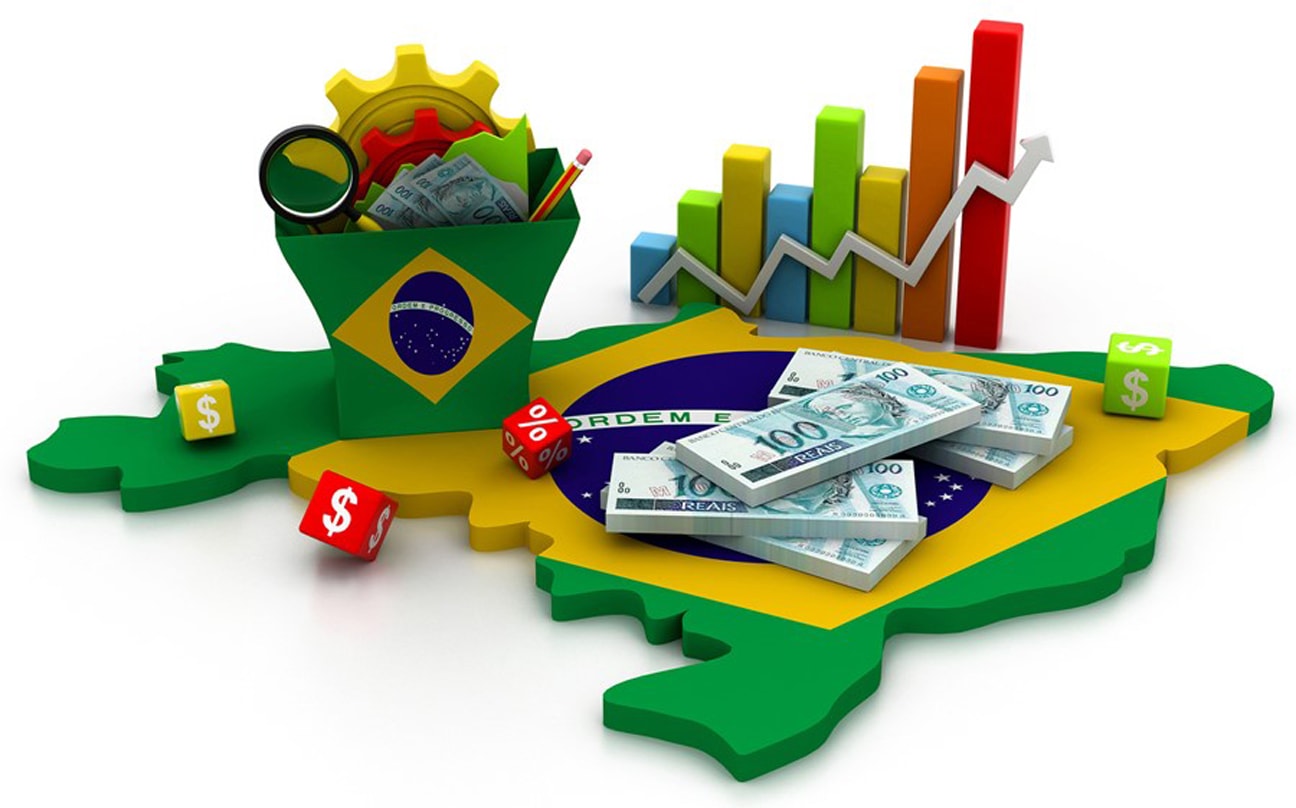
With a projected growth of 3.1% in its gross domestic product (GDP) this year, Brazil is expected to rise two positions and become the ninth largest economy in the world, the International Monetary Fund (IMF) recently announced.
The country’s GDP at the end of the year is around US$ 2.13 trillion, surpassing the US$ 2.12 trillion estimated for Canada, the institution reported. Last year, Brazil ranked 11th.
By 2026, Brazil could rise one position and become the eighth largest economy on the planet, with an estimated GDP of US$ 2.476 trillion, argues the IMF.
The projections were based on the World Economic Outlook report released in October. At that time, the IMF estimated a growth of 3.1% in Brazil’s GDP this year, compared to 2.1% predicted in the previous report.
According to the IMF, the US, China, and Germany are expected to continue being the largest economies in the world this year. The entity projects that the global economy slowed down in 2023, growing by 3%, compared to 3.5% in 2022. For 2024, the IMF estimates a global expansion of 2.9%.
For Brazil, the IMF projects a 1.5% increase in 2024. This forecast is lower than that of the Organisation for Economic Co-operation and Development (OECD), which expects a 1.8% expansion of the Brazilian economy in 2024. The Ministry of Finance projects a growth of 2.2%.
Here is the ranking of the ten largest economies in the world in 2023, according to IMF projections:
1. US – US$ 26.95 trillion;
2. China – US$ 17.7 trillion;
3. Germany – US$ 4.43 trillion;
4. Japan – US$ 4.23 trillion;
5. India – US$ 3.73 trillion;
6. United Kingdom – US$ 3.33 trillion;
7. France – US$ 3.05 trillion;
8. Italy – US$ 2.19 trillion;
9. Brazil – US$ 2.13 trillion;
10. Canada – US$ 2.12 trillion.
Source: Agência Brasil