

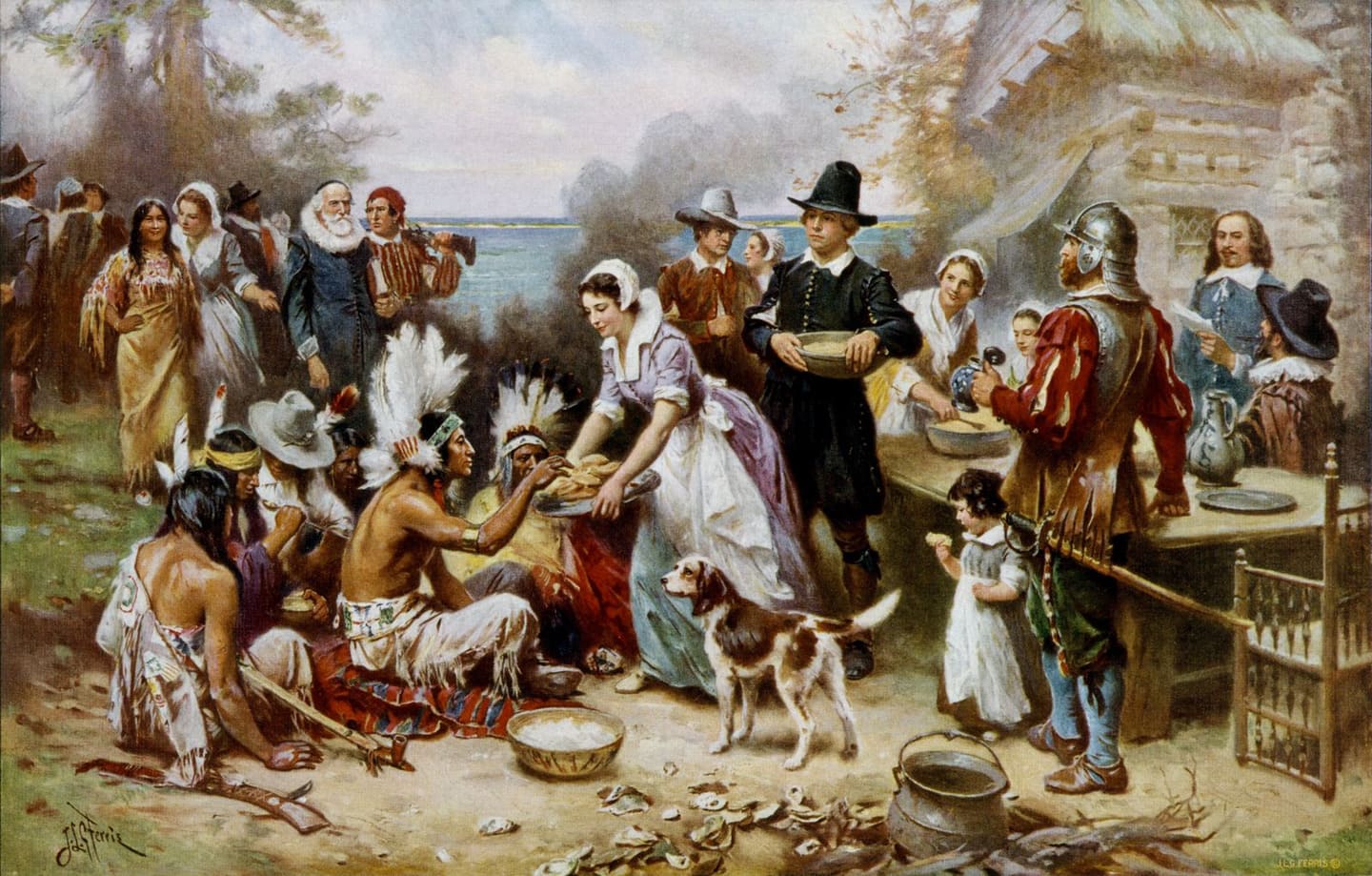
Thanksgiving is a harvest festival that originated in England and was brought to the Americas by European settlers. It is now a national holiday in the United States and Canada, and is also celebrated in other countries around the world, such as Grenada, Liberia, Saint Lucia, Australia (Norfolk Island), the Netherlands (Leiden), the Philippines, and Brazil.
Brazil? Yes. It’s a classic case of monkey see, monkey do.
Thanksgiving in Brazil, also known in Portuguese as “Dia de Ação de Graças,” is celebrated on the fourth Thursday of November, the same day as in the United States. However, it is not an official holiday in Brazil, and it is not as widely celebrated as it is in the U.S.
Thanksgiving was introduced in Brazil in the early 1940s by Joaquim Nabuco, the Brazilian ambassador to the United States. Nabuco was impressed by the American Thanksgiving tradition and believed it would be a good way to promote unity and gratitude in Brazil.
In 1949, Brazilian President Gaspar Dutra established Thanksgiving as a national holiday. However, it never caught on with the population, and it is now celebrated only by a very small minority of Brazilians.
Those who celebrate Thanksgiving in Brazil typically gather with family and friends for a feast. The traditional Thanksgiving meal in Brazil is similar to the American one, featuring turkey, stuffing, mashed potatoes, cranberry sauce, and pumpkin pie. However, there are some Brazilian twists to the meal, such as using jabuticaba sauce instead of cranberry sauce.
In addition to the feast, many Brazilians who celebrate Thanksgiving also attend church services to give thanks for the blessings of the past year.
Overall, Thanksgiving is a relatively minor holiday in Brazil. However, it is a growing tradition and is likely to become more popular in the future as more Brazilians visit and live in the U.S.