



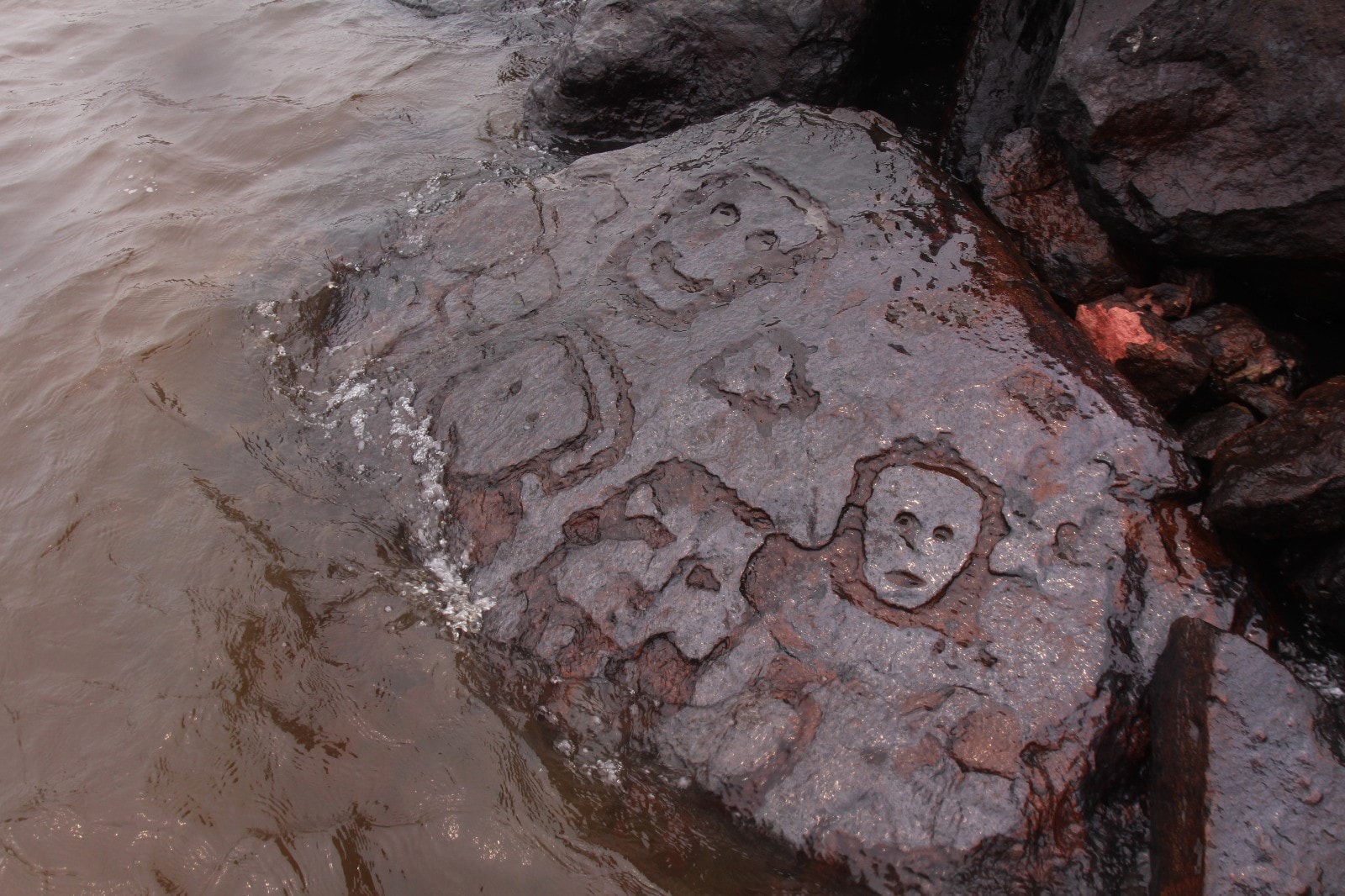
A severe drought in the Amazon River has exposed ancient rock engravings that had been submerged for centuries. The engravings, depicting human faces and other figures, are estimated to be between 1,000 and 2,000 years old.
The engravings were discovered at a site known as Ponto das Lajes, on the Rio Negro, one of the main tributaries of the Amazon. It is believed that the site was a pre-Columbian ceremonial center, and the engravings may have played a role in religious rituals.
In addition to human faces, the engravings also depict other figures, such as animals and natural shapes. This suggests that the indigenous peoples who created them had a deep connection with the natural world.
The discovery of the engravings sheds new light on the lives of the indigenous peoples who once inhabited the Amazon. It is a testament to the rich and complex culture of the region’s indigenous peoples.
It also serves as a reminder of the fragility of the Amazonian ecosystem and the threat that climate change poses to its cultural heritage. It highlights the importance of protecting the Amazon rainforest, which is home to a vast array of biodiversity and cultural heritage.
The discovery of the engravings has been met with enthusiasm by archaeologists and historians. Further studies of the engravings are expected to provide more insights into the lives and beliefs of the indigenous peoples who created them.