



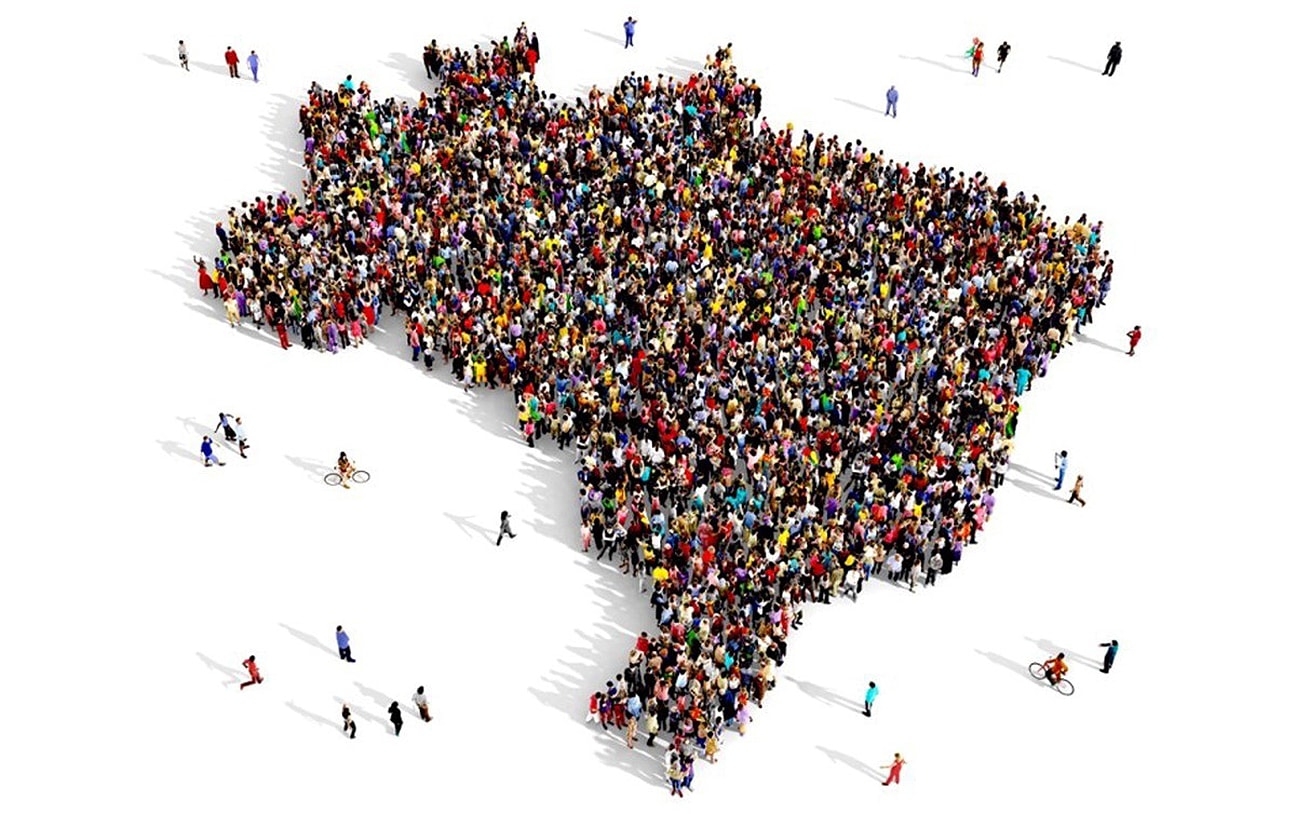
The 2022 Census shows that Brazil’s population reached 203,062,512 people, with an increase of 12.3 million since the last survey in 2010. The data was released by the Brazilian Institute of Geography and Statistics (IBGE). The average population growth in recent years was 0.52%, the lowest recorded in the country since 1872, when the first census was conducted.RegionsWith 84.8 million inhabitants, the Southeast Region remained the most populous. The total number of inhabitants corresponds to 41.8% of the country’s population. Following the Southeast are the Northeast (26.9%), South (14.7%), and North (8.5%). The least populous region is the Central-West, with 16.3 million inhabitants or 8.02% of the country’s population. Comparing the demographic censuses of 2010 and 2022, the annual population growth was not uniform across the major regions. Although still the least populous, the Central-West recorded the highest growth, with an average rate of 1.2% per year over the past 12 years. The smallest population growths were in the Northeast and Southeast. The rate is below the national average in Brazil, which is 0.52% per year.StatesSão Paulo, Minas Gerais, and Rio de Janeiro are the three most populous states in the country, concentrating 39.9% of the population. The state of São Paulo alone, with over 44 million people, represents one-fifth of the population. Following are Bahia, Paraná, and Rio Grande do Sul. In contrast, the states located on Brazil’s northern border, including Roraima, remain the least populous state (with 636,303 inhabitants), followed by Amapá and Acre. The 2022 Census also shows that 14 states and the Federal District had average annual growth rates above the national average (0.52%) between 2010 and 2022. Despite being the least populous, the state with the highest population growth was Roraima, where the average annual growth rate reached 2.92% during the period, the only one to exceed the 2% mark per year.HouseholdsThere was also an increase in the number of households in the country. There was a 34% increase compared to the 2010 Census, totaling 90.7 million. The average number of residents per household in the country is 2.79 people. This result represents a decrease compared to the 2010 Census. At that time, the average was 3.31 residents per household.The Census Summary• The population grew by 12.3 million people compared to 2010. At that time, there were 190.7 million inhabitants, and now there are 203 million; an increase of 6.4%• Regarding households, the increase was much greater: in 2010 there were 67.5 million and now there are 90.6 million, or 34% more: a growth rate five times higher than that of the population• With more households, the average number of residents per household has fallen: now it is 2.79 on average; 13 years ago, this number was 3.31• In the last 12 years, the population growth rate was 0.52% per year. It is the lowest ever recorded since 1872• São Paulo remains the most populous state, with 44 million residents; and Roraima, the least populous, with its 636 thousand inhabitants• The Southeast region has the highest number of Brazilian residents (84.8 million inhabitants), with 41.8%, while 8% live in the Central-West• Among the cities, the capital of São Paulo also leads in population, with 11.4 million people• Manaus stands out for being the city that gained the most residents in the last 12 years in absolute numbers, jumping from 1.8 million to 2 million residents• Salvador had the largest population decline, falling from 2.67 million to 2.41 million residents. As a result, the most populous metropolis in the Northeast is now Fortaleza, which has become the 4th most populous in the country• Roraima had the highest growth rate, which can be partly explained by the unprecedented inclusion of the Yanomami people in the census. The most populous cities in the country: São Paulo – 11,451,245 (1.8% more than in 2010) Rio de Janeiro – 6,211,423 (-1.7%) Brasília – 2,817,068 (+9.6%) Fortaleza – 2,428,678 (-1.0%) Salvador – 2,418,005 (-9.6%) Belo Horizonte – 2,315,560 (-2.5%) Manaus – 2,063,547 (+14.5) Curitiba – 1,773,733 (+1.2%) Recife – 1,488,920 (-3.2%) Goiânia – 1,437,237 (+10.4)Source: Agência Brasil and UOL
-
Actor Juca de Oliveira Dies at 91
Brazil lost one of the most prominent names in national performing arts in the early hours of this Saturday (21). Actor, author, and director Juca de Oliveira passed away at 91 years old in São Paulo, victim of pneumonia associated with a cardiac condition. The information was confirmed by the family’s press office to TV…